


Admin
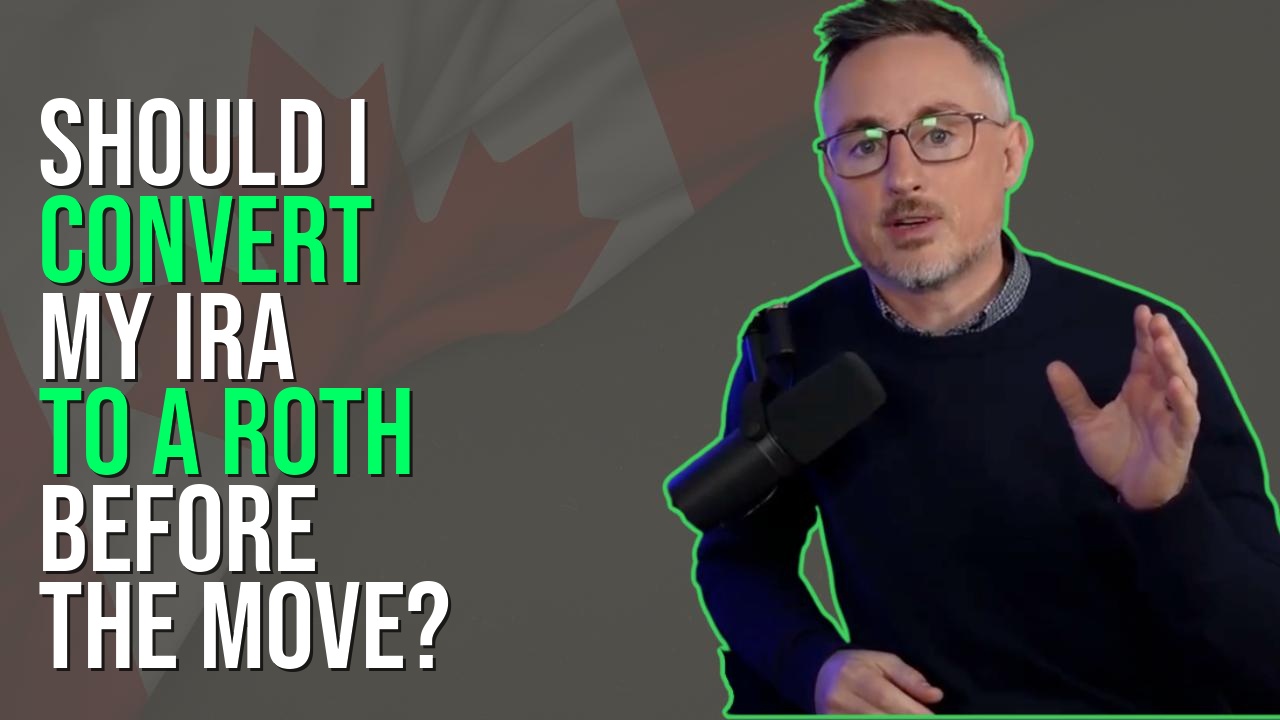
Should I Convert My IRA to a Roth Before Moving to Canada?
 01 April 26
  Cross Border Business
 Question
Hi Phil,
I found your website through the Americans in Canada Facebook group and I’m hoping you can help with something that’s been on my mind.
My wife is originally from Vancouver and we’ve been living in Arizona for about 18 years. She’s a dual citizen and I’m American. We’re both 61 and planning to move back to BC sometime in the next year or so — probably around next spring once we sell the house here.
I have a traditional IRA worth roughly $1.8 million and my financial advisor here mentioned something about converting some of it to a Roth before we make the move. He wasn’t really sure about the Canadian side of things though and honestly I don’t think he fully understands the cross-border implications.
My question is whether this Roth conversion strategy actually makes sense for someone in our situation and if so, how much should we be looking at converting? I don’t want to pay a huge tax bill right now if it’s not going to save us anything on the Canadian side down the road.
Any guidance would be really appreciated. We’re feeling a bit overwhelmed with all the moving parts here.
Thanks,
XXXXX
Answer
Hi XXXXX,
Thanks for reaching out — and I completely understand feeling overwhelmed. There are a lot of moving pieces when you’re planning a cross-border move, especially with the size of your IRA. I actually wrote a detailed article on this exact topic that you might find helpful: Moving to Canada with a Large IRA.
The short answer is yes, in most cases a Roth conversion before becoming a Canadian tax resident can make a lot of sense. Here’s why.
Once you become a Canadian tax resident, your traditional IRA distributions — including your required minimum distributions — will generally be fully taxable on the Canadian side. You’ll get a foreign tax credit in Canada for the US tax you pay, but that credit is typically capped at 15% under the treaty. So if your Canadian marginal rate is, say, 45%, you’re looking at a significant gap that the foreign tax credit won’t cover.
By converting some of that IRA to a Roth before you enter Canada, you’ll pay US tax on the conversion at your current US rate. For many clients, that rate ends up being considerably lower than what they’d pay on the Canadian side later on. So the tax you pay now on the conversion is often much less than the tax you’d pay in the future on those same IRA distributions.
As for how much to convert — it really depends on your overall income picture in the year before you move. Generally speaking, you’d want to convert enough to take advantage of the lower US brackets without pushing yourself into a bracket that eliminates the benefit. We typically work through the numbers with clients to find that sweet spot.
A couple of other things to keep in mind:
- Make sure you’re over 59½ (which you are) to avoid early withdrawal penalties on the conversion.
- The conversion needs to happen before you become a Canadian tax resident. Once you’re in Canada, the math changes significantly.
- You’ll also want to look at your taxable investment accounts and consider making them joint before the move for income-splitting purposes on the Canadian side. That’s another area where we can often save clients a fair amount of tax.
- Once you’re in Canada, it’s important to understand how your Roth IRA is treated for Canadian tax purposes — there are some specific treaty elections that need to be filed to maintain the tax-free status.
I’d strongly recommend sitting down with a cross-border advisor to map this out properly — there’s a lot of value in getting the planning right before you make the move, because many of these opportunities disappear once you become a Canadian resident.
Hope that helps, and don’t hesitate to reach out if you’d like to discuss your situation in more detail.
Regards,
Phil Hogan, CPA, CA
phil@beaconhillwm.ca
If you’re planning a move to Canada and need help with your cross-border tax and investment planning, click here to get started — we’d love to help.

[posts_like_dislike id=2944]
This commentary reflects the personal opinions, viewpoints and analyses of the Beacon Hill Wealth Management Ltd. partner providing such comments, and should not be regarded as a description of advisory services provided by Beacon Hill Wealth Management Ltd. or performance returns of any Beacon Hill Wealth Management Ltd. client. The views reflected in the commentary are subject to change at any time without notice. Nothing in this commentary constitutes investment advice, performance data or any recommendation that any particular security, portfolio of securities, transaction or investment strategy is suitable for any specific person. Any mention of a particular security and related performance data is not a recommendation to buy or sell that security. Beacon Hill Wealth Management Ltd. manages its clients’ accounts using a variety of investment techniques and strategies, which are not necessarily discussed in the commentary. Investments in securities involve the risk of loss. Past performance is no guarantee of future results. Any discussion about taxation is for educational purposes only and should not be viewed as professional advice. Consult your tax professional for tax advice on your particular situation.


Comments